Wednesday, September 2, 2009
Tuesday, August 25, 2009
BIRD'S P.S.: I SURELY DID KNOW WHAT TIME WAS

While the rain is steadily coming down at my place, I'm posting this P.S. to the below playlist. -- The first version of I Didn't Know What Time It Was, the one with the strings, was recorded at Reeves Sound Studios, NYC, November 30, 1949.
Charlie Parker obviously loved this ballad with its tonal changes between major and minor and the undecidedly oscillating chords.
There are three documented Parker renditions of the popular Rodgers & Hart collaboration. -- The most significant of the three is certainly the one he did with his regular quintet. It's on Bird At St. Nick's, where he performed with Red Rodney (tp), Al Haig (p), Tommy Potter (b), Roy Haynes (d) - St. Nicholas Arena, NYC, February 18, 1950.
It's a pity that all the other solo contributions are not recorded, but at least the pitch had been corrected for the CD issue. This album is highly recommended; every fan of Bird should have it in the collection. -- This sounds as if Charlie Parker had listened to some Edgard Varèse in the afternoon, before he did the gig.
Bird breaks time and melody in an abstract way one never heard before or after these performances. Flying double-time passages interchange with abrupt returns to the original melody, where Bird is accompanying himself, as if there was another saxophonist on stage; just as Sonny Rollins did it later on with his piano-less trios.
Listening to these recordings is like looking, or rather hearing into the future of jazz. -- I can only speculate, but it may be, that this kind of improvising would have been Bird's way to go, leaving all structures behind, freeing himself from the odd 32-bar songs and 12-bar blues.
We will never know.
The second live interpretation is with the strings again and was recorded by Chan Parker on a home recorder two years later. The strings had been jazzed up with Bird's new quintet with Walter Bishop Jr. (p), Mundell Lowe (g), Teddy Kotick (b) and Max Roach (d) - Rockland Palace, NYC, September 26, 1952.
At this occasion we can hear a Bird who tried to please the audience, who actually played for dancing. But also here: Unexpected twists of the improvisor between the almost unbearable oboe and strings interludes. I think there is no bigger contrast than between Charlie Parker's alto sound and the sweet oboe of Mitch Miller who unjustifiably got applause each time when he arose from his seat for a written-down solo at Carnegie Hall.

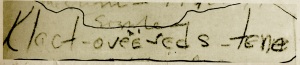
P.S. to the two survivors of both sessions: Mr. Roy Haynes and Mr. Mundell Lowe ... May you swing as madly as ever! And a big heartily thanks to Mr. Lowe who gave me this autograph in Berlin, when he performed there in a 2003:
THE MANY MOODS of CHARLIE PARKER -- A MONSOON PLAYLIST

This is an associative playlist with Charlie Parker recordings I had compiled for listening during a heavy thunderstorm and the following hard rain. There is a nice coincidence: Most of these recordings were waxed in 1949. So, we have an anniversary here as well. -- I was sitting comfortably on my balcony, had a good smoke and a cool beer, and was listening to Bird in various settings.
He had made it to quasi stardom in 1948 and the next few remaining years, when he led an elusive bourgeois way of life. Some of Bird's compositions he recorded for Mercury/Clef (later Norgran and Verve) reflect his thrill of anticipation to the Parisian Jazz Festival in 1949, where he and many other American jazz stars were invited to perform. (Cardboard, Visa & Passport).
(Here more about this event in English, and in German.)

Other tracks on this playlist present the saxophonist as a rhapsodic master of improvisation, embedded in a sea of strings, quite smoothened, but still executing sparkling ideas mostly.
The only Latin track - Mango Mangue (Part 1) - is lacking a bit of balance in sound. The biting alto is just too loudly adjusted here.
These Many Moods Of Charlie Parker are introduced with an out-take of Parker's Mood and end with another blues, I had posted in this blog last year already.
I hope you will enjoy this playlist. (Tracks & credits in comments.)
All boppish best,
Brew
The albums:
Bird With Strings - The Master Takes
South The Border - The Verve Latin Jazz Sides
Bird's Best Bop On Verve

Saturday, August 22, 2009
OLEO -- SONNY ROLLINS, DON CHERRY, BOB CRANSHAW, BILLY HIGGINS -- VILLAGE GATE -- JULY 1962

This is dedicated to my free jazz friends in Boston. Above all to you, Mr. Rich! -- Added to this wild and inspired odyssey through the cliffs of the song to the margarine -- Enough metaphors, Chris? -- you can watch my oleander in full bloom. -- Enough associations?

Take these 25 minutes of your time, lean back and listen. Then come back the other day, and listen again.
Freeboppishly yours truly,
Brew
P.S.: This was the very first kinda free-bop recording I ever heard. I was sitting in front of the radio and understood nothing at first. But I had taped the broadcast and listened to it again, and again. -- 10 years later we played "Oleo" with two muted trumpets in that very tempo. It is a wonderful experience to throw all away you know because you can't think in this speed. Just do it! -- Then you get the idea of Sonny Rollins on Williamsburg Bridge, trying out new things.
We are free!

Oleo -- Sonny Rollins Quartet from Our Man In Jazz
Wednesday, August 19, 2009
BACK HOME BACKYARDS WITH BLOSSOMS
Sunday, August 16, 2009
Wine, Women & Bach
Repost: LET'S HAVE A PARTY WITH THE DUKE & HIS STAR ON TENORSAX, MR. PAUL GONSALVES - on "READY GO" or "BLOW BY BLOW" (1961)
You certainly all know "Diminuendo & Crescendo In Blue" from the Newport Jazz Festival on July 7, 1956 where Paul Gonsalves was playing 27 chorusses on the blues?! Now, the below video will give you a visual impression for how magical that event had been. I'll hope you will enjoy the following clip, which was sent to me by one of my American friends. Thanks a lot Mr. B!
And here a later one from 1963, the original Diminuendo & Crescendo In Blue, again featuring the wonderful Mr. Paul Gonsalves:
Part 2 on another video:
And here a later one from 1963, the original Diminuendo & Crescendo In Blue, again featuring the wonderful Mr. Paul Gonsalves:
Part 2 on another video:
Friday, July 31, 2009
THE FIVE PENNIES SAINTS -- SOME OF MINE TOO

Dear folks,
Since I reflected about my musical heros, influences, and all the fabulous musicians I heard and had the pleasure to meet, I decided to post one single track which names them all. Now, how can that be?
Just give it a listen, and try to figure it out:
I only say: "Gesundheit!"
All best,
Brewstrong
P.S.: all what I have to dig out now, is a song, performed by classical singers which lists jazz guys ...
Thursday, July 30, 2009
R.I.P. George Allen Russell -- 1923-2009

Chano Pozo's congas fire the lydian Cuban mood, spiced with dizzy chromatic trumpet lines, and we all shout: "Cubano be, cubano bop!", in response to Chano's Afro-Cuban sermon.
The young man who wrote this memorable piece of Cuban bop for Dizzy Gillespie's revolutionary orchestra in 1947, was George Russell, one of the last jazz composers of formate, and a visionary (jazz) man. Without him no Kind Of Blue, the most successful of all jazz albums. With his Lydian Chromatic Concept Of Tonal Organization he said nothing else than everything is possible. We are free.
There are no limits in jazz, in musical expression, no "important" or less important sounds, scales or rhythms; one could even postulate that there are no wrong notes at all; only out-of-tune instruments, like the ones, used by the Duke's men in the beginning, before his orchestra became "his famous orchestra".
George Russell invented a new harmonic language in jazz, respectively did he just bring to paper what was already in the air, played by Charlie Parker, Thelonious Monk and Dizzy Gillespie.
He was one of the first musicians, not a journalist, who scientifically explored jazz music, wrote it down, and added his findings to the then still quite scarce output of serious jazz research. He didn't transport his insights through oral tradition alone, as it was and still is common in jazz to a certain amount, he put down in writing what musicians often can't explain sufficiently and understandable. The problem is: jazz musicians are practitioners rather than being big theoreticians.
And so, it has been one of the fortunes in jazz that he gave up the drum chair in Benny Carter's orchestra after having heard Max Roach who replaced him.
In the liners to one of his finest albums, The RCA Victor Jazz Workshop, he said:
"All the compositions in this album were approached in the same way. A preconceived plan which contained a thematic as well an emotional objective was devised. Some followed the original plan while others exerted their own inherent will." He had the humor!

Most of us jazz musicians take for granted today, what women and men like Mary Lou Williams, Duke Ellington, Thelonious Monk, or George Russell have explored 60 or more years ago. One could ask, if too much theory forced on jazz - which should be as spontaneous as possible -, if too many written notes wouldn't spoil the fun of improvising?
I only say, it depends on the player. When I hear some of the younger folks today, I not too seldom would like to shout at them: "Hey, buddy, burn those sheets, play as you feel it, forget what you know, what you learned!"
But what has George Russell to do with the bloodless theoreticians who took away the essence of jazz, who squeezed every chord in a wooden frame of rules and advises? Jamey Aebersold is not George Russell's fault.
So, just play, forget about the rules. -- ??? -- Contradiction: Don't forget to substitute the B-flat in the F-major scale with B-natural ... Why that now? Because it makes you free to listen!
George Russell left our world on July 27, 2009. The world will never forget him. The world says: "Thanks, Mr. Russell, for the beautiful music!"
More Albums:
Dizzy Gillespie - The Complete RCA Victor Recordings - 1947-1949
Buddy DeFranco - A Bird In Igor's Yard - 1949-1952, a review with a short biography of George Russell
Ezz-Thetics - 1961
George Russell Memorial Playlist (please see titles and credits in comments):

Links:
George Russell Website
George Russell obituary in Rifftides
Article On George Russell In The Boston Globe
George Russell obituary in the Washington Post
George Russell in Wikipedia
George Russell, remembered at King Ubu's Jazz Blog
George Russell Obituary at Marc Myer's JazzWax
Remembering George Russell at "The Latin Jazz Corner"
Thursday, July 23, 2009
CLARKE-BOLAND REVISITED: The JAMFS Are Coming!

Dear swingin' folks,
It was a great pleasure for me, having been able to enjoy so many readers and listeners with my recent "Sax No End"-anthology. -- Here we go with another tune with the orchestra, this time by one of the most prolific and illustrious masters of the tenorsax: Johnny Griffin, also called "The Little Giant", some say "the fastest sax-player ever." He had been cast as the boppish "counterpart" to the bluesier Eddie "Lockjaw" Davis.
A friend of mine, Mr. Eddy Less, gave me a clue where Mr. Griffin got his sparkling ideas from. We listened to Chet Baker In New York, one of the rare pure hardbop-albums with the trumpeter, when Eddy pointed to the pitch control during one of Johnny's solos, saying: "Speed it up to 45, you will be surprised!"
I did so, and what I heard was flabbergasting: Johnny's improvisations sounded partly like almost too perfect blueprints of Bird's alto flights! Okay, the sound was quite different, but it was clear all of a sudden who had influenced the man in the first place.
Okay, enough talking, let's go for the music with a little playlist of The Jamfs Are Coming:

Credits: The Kenny Clarke-Francy Boland Big Band with Benny Bailey, Idrees Sulieman, Tony Fisher, Dusko Gojkovic (tp); Åke Persson, Nat Peck, Eric van Lier (tb); Derek Humble, Johnny Griffin, Ronnie Scott, Tony Coe, Sahib Shihab (reeds); Francy Boland (p, co-leader, arr); Jean Warland (b); Kenny Clarke (d, co-leader); Kenny Clare (d) -- Lindström Studios, Cologne, Germany: May 27, 1969
The JAMFs Are Coming (Johnny Griffin) - Solos: Shihab (ss), Griffin (ts), Persson (tb) -- For discographical researches on the Clarke-Boland aggregation, please click on HERE
Again Oscar Peterson, covering yet another Clarke-Boland tune (p), George Mraz (b), Ray Price (d) -- MPS Studio, Villingen, Germany, 1970.

The composer himself comes next: Johnny Griffin (ts), Rein de Graaff (p) and / or Henk Haverhoek (p), Koos Serierse (b), Art Taylor (d) -- Recorded Live at The Blue Note im Pumpwerk, Wilhelmshaven, Germany, December 1975 and / or October 1977.
You can purchase the albums here:
All Blues - The Clarke-Boland Big Band
Another Day - Oscar Peterson Trio
The Jamfs Are Coming! - Johnny Griffin Quartet
What "Jamfs" are? -- What the heck do I know! -- Ask me ...
Monday, July 20, 2009
UP, UP AND AWAY -- CELEBRATING JULY 20, 1969

(Blog owner's note: Please see 'comments' for performers and years.)
"That's One Small Step For Man, One Giant Leap For Mankind." -- Closer listening proved: Neil Armstrong said exactly that.
For more pictures, fantastic pictures go here: The Project Apollo Archive
Please click on the picture to enlarge ... it's impressive!P.S.:
Neil Armstrong's words on first setting foot on the moon, in 1969. A strong contender as the most famous line ever to have been uttered.
Armstrong's words are sometimes given as, "That's one small step for man, one giant leap for mankind." Clearly the event was of huge significance and the choice of words was quite deliberate. Armstrong maintained for some time later that he said "for a man" rather than "for man". That line was what he, with the help of his wife, had prepared in advance. The rather fuzzy tapes of the event aren't clear enough to be sure, although the 'a' does appear to be missing.
In more recent years, after listening again to the recording, Armstrong has acknowledged that he may have fluffed his line. More recently still, analysis of the tape indicates that the 'a' may have be present on the recording but is too indistinct to hear.
Wednesday, July 15, 2009
What became of CHINATOWN, MY CHINATOWN? -- SAX NO END
Dear friends,I'm dedicating this entry to Sabina, and a good friend of mine, an American saxophonist, living in the beautiful Netherlands. It's a very hot Summer, and I'm at Sylt again, posting from an internet café (prepared that post in advance).
The sea is blue, the seagulls scream, and the saxes are swingin', aren't they? -- We will hear Eddie "Lockjaw" Davis, a hard-driving Kenny Clarke, a bursting Oscar Peterson, who is playing the original sax-chorus on the piano, and we will jump right into the sea of saxes by starting off with John Nesbitt's arrangement of Chinatown, My Chinatown on which Francy Boland's Sax No End is based on.
jpg.jpg)
Fletcher Henderson & His Orchestra with solos from Rex Stewart (cnt), Benny Carter (cl), Claude Jones (tb), Coleman Hawkins (ts), recorded on October 3, 1930:
Now, directly to the year 1967. Francy Boland did a great job with this one. -- I purchased the LP in London, while I spent some time there during the also very hot Summer of 1983. The featured soloist here is Eddie "Lockjaw" Davis, and the members of the sax-section were: Derek Humble, Carl Drevo, Ronnie Scott, Sahib Shihab and Johnny Griffin. -- Recorded in Cologne, on June 18, 1967:


The Clarke-Boland Big Band did the same tune in 1969, during a concert. But before we come to that, here's the fabulous Oscar Peterson with Sam Jones and Bobby Durham on bass and drums. This is from a semi-private concert, nevertheless for the purpose of being recorded. That's the Oscar Peterson at the peak of his creativity. He seems to have more than 10 fingers here. It was the year of rebellion, 1968, when Oscar transferred the 5 saxes to the 88 keys:
Here we go with the Clarke-Boland Big Band again, now sporting all five saxophonists, but no Eddie Davis: Derek Humble (as), Tony Coe (ts), Johnny Griffin (ts), Ronnie Scott (ts), Sahib Shihab (bs), live in Cologne/Germany, 1969, "Battle of the Bands":
Sounds a bit wild and uncontrolled, doesn't it? But what would you expect from a band in a battle?!
UTuber "Cheeseford" wrote to the below video:
Based on the changes for 'Chinatown', here's a 1968 recording (slightly abbreviated - live, it could go on for 20 minutes) of Francy Boland's 'Sax No End', featuring one of the best saxophone sections of any jazz orchestra ever. Soloists in order are: Johnny Griffin, Tony Coe, Ronnie Scott, Sahib Shihab & Derek Humble. The solos are great, but just wait for the soli section where all five play as one. Having Kenny Clarke and Kenny Clare behind you helps a bit too...
Amen!
Saturday, July 4, 2009
THE 4th of JULY with FOUR BROTHERS and a SWINGIN' SISTER

Dear American friends,
Have a swingin' 4th of July!
All best to you from your friend,
Brew
=============================
This is not an article, just a little link-collection. (Blog owner's note: For following the chord progression while listening, I would recommend to open at least one 2nd window.)
The biography of the composer, Jimmy Giuffre, is HERE.
A short description of Four Brothers can be found HERE, a midi-file and the chord progression you'll find HERE and HERE.
HERE you can discover a lot of CD's with Jimmy Giuffre.
A huge list with more artists who performed that influential tune can be browsed HERE.
An interesting article on Mr. Giuffre can be read HERE.
A humble entry with the mentioning of yours truly can be studied HERE (You just have to scroll down a little).
Wanna listen to 9 - yep, nine! - versions in a row, now? -- Let's start with Miles Davis who'd told Rudy Van Gelder in the studio once:
"I'll play it, and tell you what it is later." ... Ding, dong, dang, dung, dung, dang, ding, dong ... etc. ...
Here we go:
More or less four brothers & one sister ...
Monday, June 15, 2009
SURPRISE, SURPRISE

Some of the many visitors here – we’re to an average 200 per day – might have noticed my alert blog about „Rab Hines“ (see HERE) and also might have seen the feature about me, aired by SPIEGEL TV in May this year. And as things come ...
This morning I received a call by a secretary from a multinational company based in Germany. After a few preliminary words, she connected me with her boss, a CEO of said company. Honestly, I didn’t know what to say, but anyway ... I could save my words nonetheless, since Mr. D. did all the talk, having seen the feature on television, and asking me whether my band and me would play at his 25th wedding anniversary at the end of September, he wanting to support my case, and also being a big fan of the music of Benny, Duke, and Ella.
I was even more – no, completely – speechless when he offered me a damn nice five-figure sum for the gig, but of course, I accepted. Gosh, looks like me and the boys have a lot to practice, but as the old men used to say, there’s still time. „September Song“ has never been in my repertoire until now, but that’s manageable, I think ... at least Walter Huston style ;-)
So, what did I reply? I felt like Paul Newman in the great 60s movie „Cool Hand Luke“, and said: „Yes, Boss, of course, sure, Boss, anything against me ’n the Boys play’n ‚Wrap Your Troubles in Dreams’, Boss?“
I’m not sure whether he ever heard of that song. He just answered, in quite a throaty voice, „We got a deal, okay? My secretary will send you a letter of agreement then.“
And then I was alone again. What are we gonna play? Will keep you posted, about song list and gig as well.

A P.S., dedicated to one of my friends from BBT:
Monday, June 8, 2009
MOSTLY FRENCH & NO SWING -- BUT GOOD FEELINGS
After all D-Day and war sounds, something mainly French and mostly positive vibrations from my blog again (as usual). With this playlist I would like to honor two great composers, respectively film composers: Nino Rota, who is still famous, and François de Roubaix, unfortunately underrated and quite forgotten today.
The four tracks have at least one link: The grand old French actor Alain Delon who is singing the beautiful Laetitia from one of my favorite films Les Aventuriers (1967), a heartbreaking adventure with Joanna Shimkus, Lino Ventura and Alain Delon.

One of Nino Rota's finest works is his scarce, almost inaudible score to René Clement's Plein Soleil (1959), a colorful, a powerful motion picture whose end you'll never forget when you watched it even only once in your life. This film drags you in the actions and emotions of Mr. Ripley (Delon) in such a tricky way, that you really don't want the very talented man got caught because he is such a ... nice guy.
The very same with Les Aventuriers: You'll never forget the end credits. There are some other memorable scenes too, especially the one when Alain Delon's character is flying through Paris' Arc de Triomphe with a small aircraft, just for fun and - of course! - for adventure.
The years between 1959 and 1968 were years of change: A rebellious youth knocked at the doors of state power, a new generation in Europe and the USA began "thinking" (if generations ever can think at all), and the walls of racism and prejudices started to totter. Films like Plein Soleil and Les Aventuriers were good companions to the young folks and told them, they were not alone in their struggles.
_01.jpg)
I hope you'll enjoy listening.
All best,
Brew
Christiane Legrand sang the main theme to Les Aventuriers, and Joanna Shimkus did the vocal on the other track from the same film.

Saturday, June 6, 2009
IT HAPPENED 65 YEARS AGO: D-DAY - JUNE 6, 1944

The president of the United States of America, Barack Obama, who has just visited Germany yesterday, was in Normandy this morning, for celebrating the day which helped to end World War II in Europe 65 years ago: The day of the invasion, June 6, 1944.

With this swingin' little playlist, organized as kinda broadcast, I want to honor all soldiers of the Allied Forces who participated in this bloody but victorious battle for freedom and democracy.
All tracks are more or less loosely connected to this very day. I recommend that you'd listen closely to track #2 because it had been interrupted for a surprising announcement. Harry James' theme Ciribiribin is working as a bracket. It is taken from the famous D-Day-Broadcast with Harry James & His Orchestra; just like the beautiful arrangement of It Could Happen To You, sung by Kitty Kallen. Tommy and Jimmy Dorsey's Brotherly Jump is dedicated to the combined troops of Americans, Australians, British, Canadians, Free French, Norwegians and Polish under the command of General Dwight D. Eisenhower which landed at "Utah, Omaha, Gold, Juno and Sword", the five sections which divided the beaches of Normandy. They were all soul brothers who fought for the same war aim: Getting rid of the nazi tyranny once and for all.Count Basie's On The Upbeat was one of the theme songs of AFN, the American Forces Network right after the war in Germany. The P.S. is played by Glenn Miller's Army Air Force Band, a beautiful rendition of David Rose's Holiday For Strings, which was broadcasted by the British Forces Network (BFN in Hamburg) in the weeks after the war. It has a special, a very moving memory attached: This very theme became the liberation song of a friend and neighbor of mine, a German best selling author and Holocaust survivor who is living right around the corner, here in the beautiful Bay-In-Valley, the South-End of Cologne.
All other tracks are self-explanatory and stem mostly from V-Discs.
More about D-Day here: Normandy, June 6, 1944
Thursday, June 4, 2009
Repost: SOME HAPPY BLUES -- YES, THEY EXIST!

Now, who are those guys? You'll hear and certainly recognize 'em since they announce themselves and you can hear one famous theme song in the beginning and the other in the coda. Benny Carter's on alto-sax, Charlie Shavers on trumpet. Enjoy!
The Happy Blues - The Hollywood Hucksters (1947)
A friend of mine, Mr. B. from New Jersey had sent me the "lyrics" to those funny pieces of blues:
THE HAPPY BLUES
as sung by Stanley and Benny
Brew.....I think I got most of them...
All--Happy am I Happy am I
S---My name is Stanley Kenton, I feel so good I want to sing, sing, sing
B---So What! My name is Benny Goodman, it ain't so hard, but you don't swing, swing, swing
S---Say you know some folks mistake me for another guy named Bing, Bing, Bing
B---Now Stan, I beg your pardon, your reputation's really great, great, great But if that's artistry in rhythm, don't serve me up another plate, plate, plate
S---You might be king of the clarinet, Ben, but as singer you don't rate, rate, rate
Solos
B---I hear you got a band that features nineteen brass, and when they hit a clinker, you call it progressive jazz
S---Now watch it Mr Goodman, be careful what you say, say, say I know exactly what you're doing , you're giving me the old BG ray, ray, ray
B---Now listen old man Kenton, let's hear no more from you, you, you
S---Now come on, Mr Goodman, I could ask the same thing too, you know that's true, too
B---You are so right, Mr Kenton, we can't sing blues when we're not blue, blue, blue
Benny & Stanley: - We've got those happy blues, blues, blues...................
Subscribe to:
Posts (Atom)